
Industrial Hooter Manufacturer in India: Complete Guide to Network-Based Industrial Alarms
Many plants still run old wired hooters, switched on by a relay and a long cable. They work, but they are hard to scale, hard to monitor and impossible to control from a central room. As a result, more Indian plants now ask for a modern industrial hooter manufacturer in India who can supply network-ready, IP-based alarms.
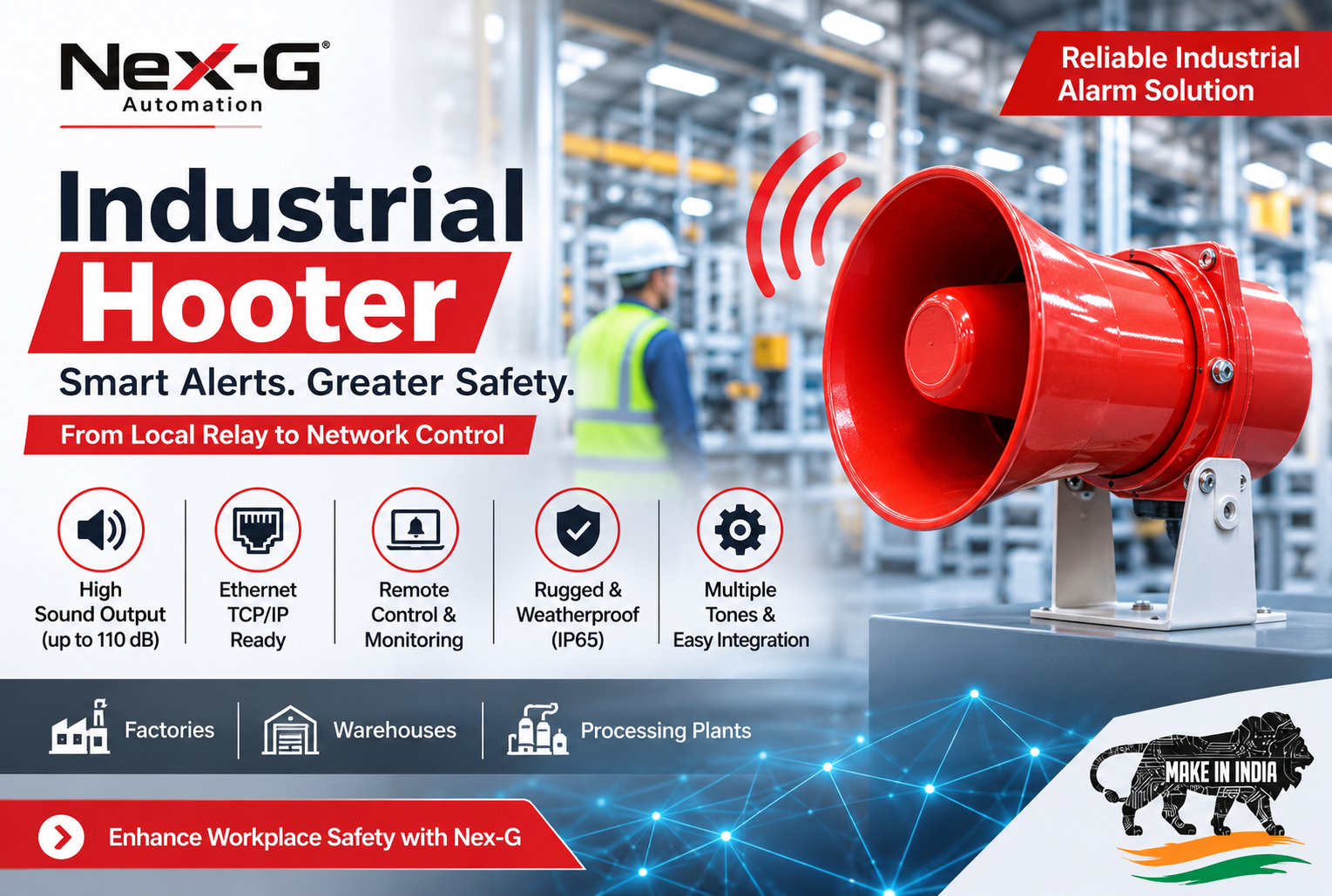
This guide explains what an industrial hooter is, how the technology has changed, and how to choose the right manufacturer.
1. What Is an Industrial Hooter?
An industrial hooter is a loud audible alarm device used to warn workers in factories, plants, warehouses and other hazardous sites. It is built for harsh conditions such as dust, heat, vibration and long operating hours, and its output is far louder than a normal office buzzer.
Common uses include:
Fire and emergency evacuation alerts
Shift start, break and end signals
Machine fault or process alarms
Forklift and crane movement warnings
Gas leak, high temperature and safety interlock alerts
Access and security breach alarms
2. From Wired Hooters to Network Hooters
A traditional hooter needs a dedicated cable and a relay or contactor. Once installed, it can only be switched locally. A network hooter (also called an Ethernet hooter or IP hooter) connects to your existing LAN and is triggered with a command over TCP/IP.
This brings clear benefits:
Remote control: Trigger a hooter in any building from the control room, a PC or a mobile device.
Less cabling: One Ethernet cable replaces long runs of control wiring.
Easy scaling: Adding a new hooter means adding a new IP address.
Integration: It can work with PLC, SCADA, access control and fire systems.
Central management: Control many hooters across zones from one dashboard.
To see how this works in detail, read our guide on how a network hooter works and our Ethernet IP hooter.
3. Key Features to Check in an Industrial Hooter
Before you pick a supplier, compare these points.
Sound output and coverage. Choose a sound level suited to your hall size and background noise, and ask for the dB rating at a stated distance. A noisy press shop needs a very different hooter from a quiet packaging line.
Network protocol support. For an IP hooter, confirm TCP/IP support, a static IP option, and whether it responds to simple commands that PLC, SCADA or custom software can send.
Power options. Look for a suitable supply, such as 12V, 24V DC or AC, and consider Power over Ethernet or backup power where alarms must work during an outage.
Build quality. The enclosure should have a suitable ingress protection rating, resist dust and moisture, and tolerate temperature swings.
Multiple tones and patterns. A good hooter offers different sounds for different events, so workers can tell a fire alarm from a shift bell.
Software and API support. The manufacturer should provide control software, a test utility and clear documentation for developers.
4. Why Choose an Indian Manufacturer?
Working with a local IP hooter manufacturer in India has practical advantages:
Faster delivery and shorter lead times
Customization for Indian plant conditions and voltage standards
Easier warranty, repair and spares
No import delays or currency risk
Direct access to the design team for custom requirements
Nex-G Automation designs and develops its own electronics, firmware and software in-house. That means we can adapt a hooter to your site instead of forcing you to adapt to a fixed catalogue product. Learn more about our complete industrial Ethernet alarm system.
5. Where Industrial Hooters Are Used
Manufacturing plants: Machine alerts, shift signals and emergency alarms
Warehouses and logistics: Forklift zone and loading dock warnings
Cold storage: Temperature breach alarms
Water treatment plants: Level, pressure and fault alerts
Pharma and food units: Hygiene zone and process alarms
Data centers and BFSI sites: Security and emergency notifications
6. Can an Industrial Hooter Integrate with PLC and SCADA?
Yes. An Ethernet-based hooter can be triggered by a PLC output, a SCADA event or custom software sending a TCP/IP command. This lets your existing automation decide when to sound the alarm, with no one standing at a switch.
For a deeper look, see our post on remote hooter control through TCP/IP.
7. Safety Standards and Guidance
Alarm design is part of a wider workplace safety plan. For general guidance on employee alarm systems and emergency action plans, see OSHA. For fire alarm and signalling practice, see NFPA. For Indian factory safety rules, see the Ministry of Labour and Employment.
Always confirm the requirements that apply to your site and state.
8. How to Choose the Right Industrial Hooter Manufacturer
Ask any supplier these questions:
Do you design and manufacture in India, or only resell?
Can the hooter be controlled over TCP/IP, and is documentation provided?
What are the sound level, ingress protection and operating temperature ratings?
Can you customise tones, voltage or enclosure?
What warranty, spares and after-sales support do you offer?
Can you integrate with my PLC, SCADA or existing software?
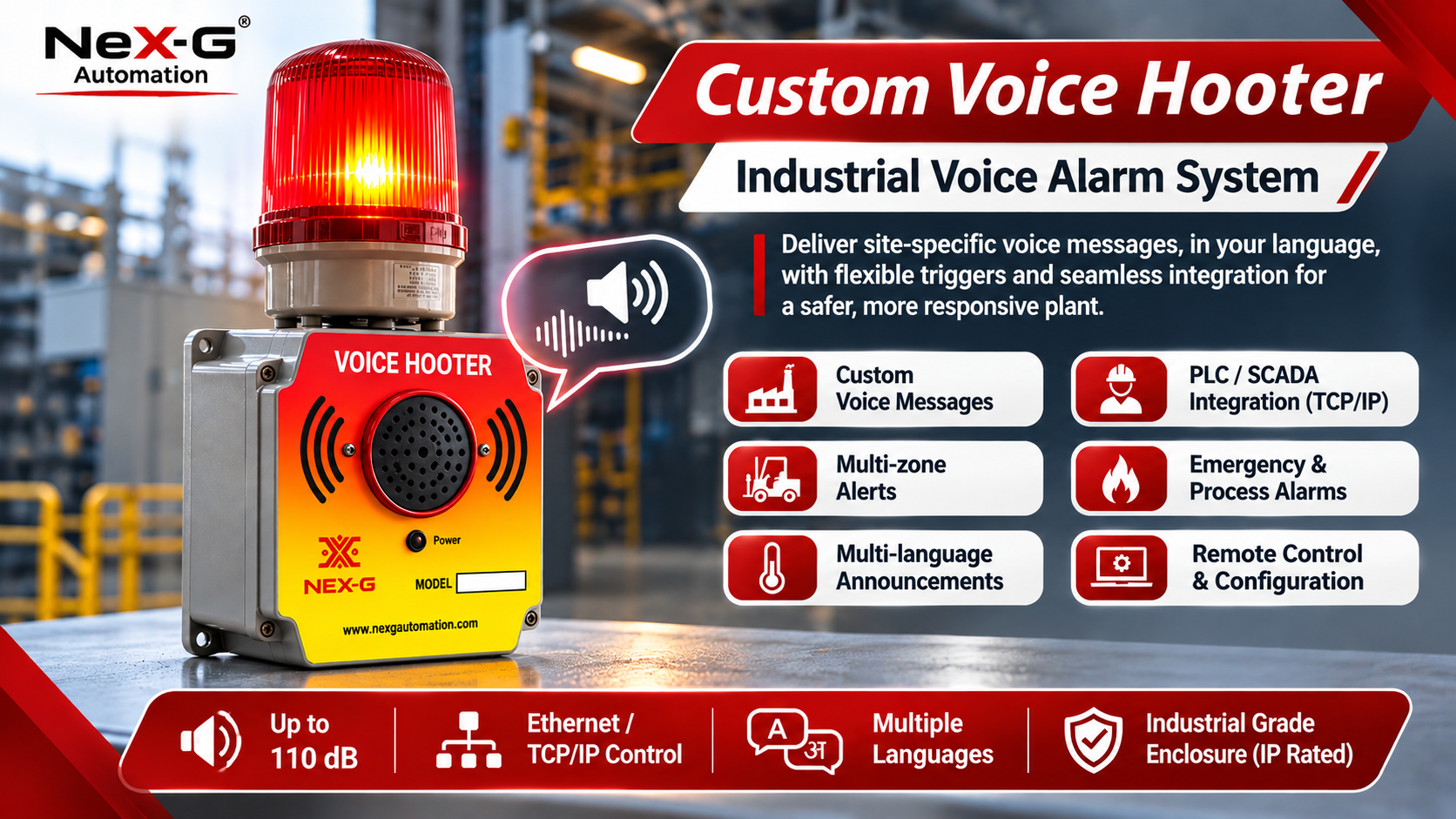
If you want spoken alerts built around your own messages and languages, also read our guide to the custom voice hooter.
9. Frequently Asked Questions
Who is the best industrial hooter manufacturer in India?
The best choice depends on your needs, but look for a manufacturer that designs its own products, supports network control, and offers customisation and local service.
What is an IP hooter?
An IP hooter is an alarm device connected to a network and triggered by commands sent over TCP/IP, so it can be controlled remotely.
What is the difference between a normal hooter and a network hooter?
A normal hooter is switched by a local relay. A network hooter is controlled over Ethernet, which allows remote control, central management and integration with other systems.
Can a hooter be controlled remotely through TCP/IP?
Yes. An Ethernet hooter accepts TCP/IP commands from a PC, PLC, SCADA system or mobile app.
Can I get a customised hooter for my plant?
Yes. Tones, voltage, enclosure and communication can be tailored to your site.
10. Get an Industrial Hooter Built for Your Plant
Looking for a dependable industrial hooter manufacturer in India? Talk to the Nex-G Automation team about your site, and we will recommend the right alarm setup.
Contact us today for a quote.