ISO Certified Certified
Trusted Partner Trusted Partner
Startup India Certified Certified
ISO Certified Certified
Trusted Partner Trusted Partner
Startup India Certified Certified
ISO Certified Certified
Trusted Partner Trusted Partner
Startup India Certified Certified
RFID ENGINE ACTIVE

RFID Inventory
Management System

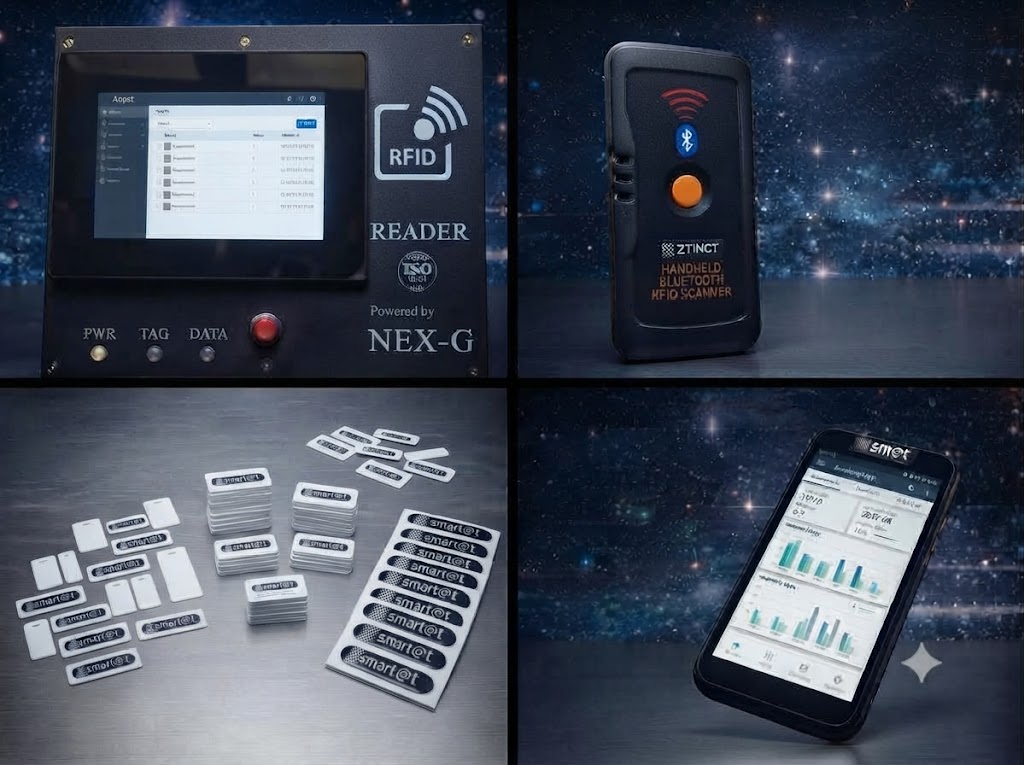
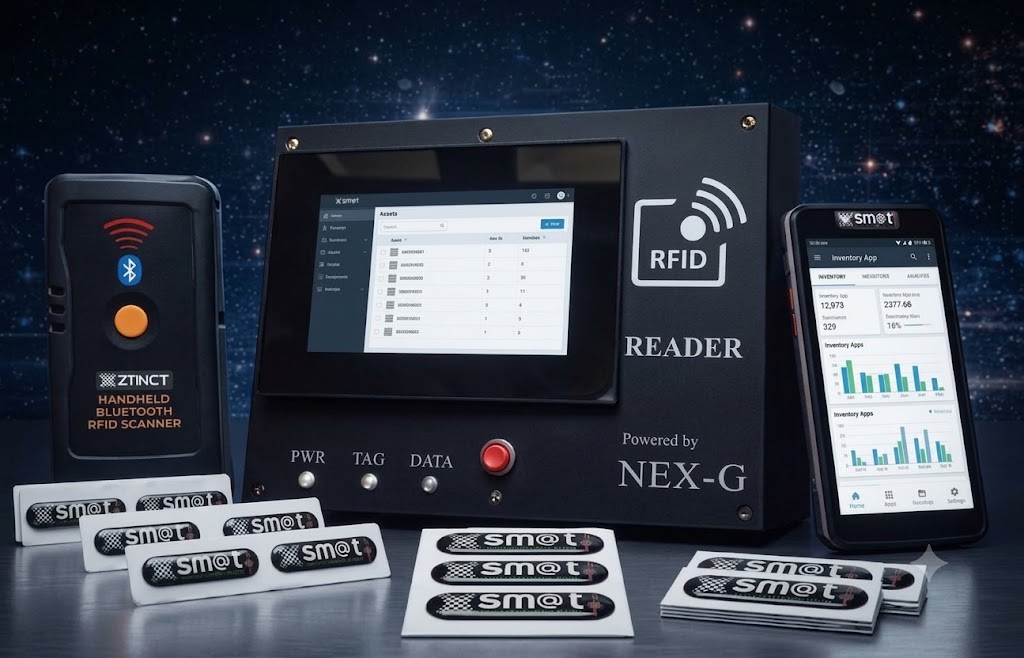
Revolutionizing Asset & Stock Tracking with Seamless Automation. IoT-enabled non-line-of-sight bulk scanning subsystem that automatically captures and pushes telemetry datasets directly to cloud HTTP infrastructures.

UHF Scan EngineUp to 6m RangeHTTP Real-Time PostBulk Anti-CollisionNo Line-of-Sight Required
Integration guide
RFID Inventory Management System
Nex-G Automation LLP
UHFUltra High Frequency Technology
≤6mDynamic Scan Range Area
HTTPReal-Time Web API Posting
-80%Processing Window Reduction

Automated identification for faster, connected asset and stock tracking.

Designed for warehouse, retail, industrial, library, healthcare and event logistics environments, the system uses UHF RFID technology for non-line-of-sight bulk scanning and automated telemetry capture.

UHF bulk scanningUp to 6m read rangeHTTP / HTTPS postingEthernet / Wi-FiFixed or handheld versionsCloud-ready telemetry
RFID Inventory Management System

From multi-tag scanning to real-time web data.

The RFID subsystem captures tag telemetry in bulk, reduces manual processing windows and posts structured data to backend HTTP infrastructures for connected inventory workflows.

01UHF Scan Engine
02Multi-Tag Processing
03Network Data Posting
04Backend Integration
05Anti-Collision
06Cloud-Ready Telemetry

How the RFID Inventory Management System works.

UHF tags are captured in bulk, processed by the RFID engine and transmitted through Ethernet or Wi-Fi to configured backend HTTP/HTTPS infrastructure.

01RFID CaptureUHF tags are scanned across the configured tracking area without requiring individual line-of-sight checks.
02Bulk ProcessingMultiple tags are identified simultaneously to reduce serialization bottlenecks across loading and storage areas.
03Network ConnectivityEthernet or Wi-Fi integration connects the RFID node to the target infrastructure.
04HTTP PostingCaptured telemetry is pushed through native HTTP / HTTPS protocol support.
05System IntegrationStructured data can be connected to backend systems using configured JSON, CSV or Raw Hex formats.

From RFID scan to connected inventory data.

The RFID architecture converts bulk tag reads into structured telemetry for connected inventory and asset workflows.

01
Tags are scanned
RFID tags enter the configured UHF scanning area.
→
02
Multiple tags are identified
The anti-collision engine processes dense tag groups without manual scanning.
→
03
Telemetry is transmitted
Processed RFID data is sent through Ethernet or Wi-Fi using HTTP/HTTPS.
→
04
Backend receives data
Connected systems receive structured inventory and asset telemetry for processing.

Built for automated, non-line-of-sight inventory processing.

Bulk Tag ScanningProcess dense product arrays simultaneously to reduce serialization chokepoints across loading zones.
Real-Time API DropsPush captured telemetry directly to backend HTTP web engines without manual verification pauses.
Non-Line-of-Sight ReadingRead tracking chips through wooden crates, cardboard boxing layers and dense structural shelf arrays.
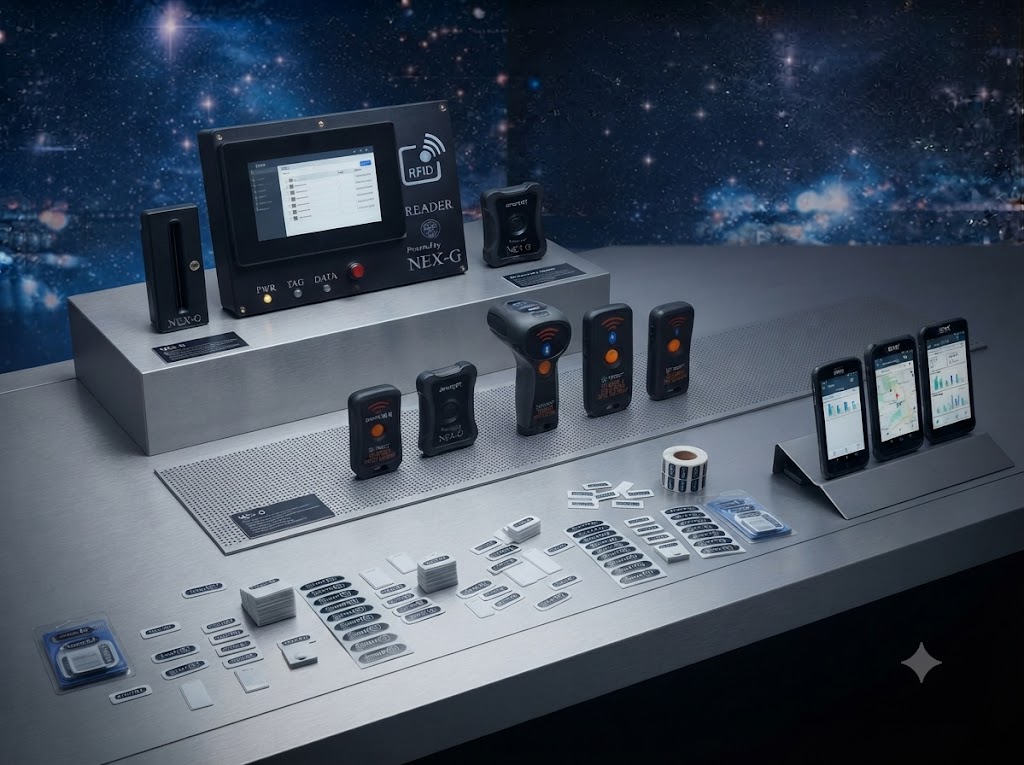
Fixed or HandheldDeploy persistent fixed architectural nodes or rugged handheld field tracking solutions.

Key capabilities

Designed for automated RFID identification, connected telemetry and flexible deployment across warehouse and asset tracking environments.

01
High-Speed Multi-Tag Processing
Scans and identifies dense product arrays simultaneously, preventing serialization chokepoints across loading zones.
02
Real-Time Network API Drops
Decoupled telemetry captures instantly map and pipe data values to backend HTTP web engines without human verification pauses.
03
Zero Line-of-Sight Bottlenecks
Read tracking chips securely through wooden crates, cardboard boxing layers and dense structural shelf arrays.
04
Flexible Form-Factor Schemes
Deploy persistent fixed overhead portal systems or scale outward into flexible handheld field tracking solutions.
05
Total Human Error Mitigation
Suppress manual cycle checking inaccuracies, yielding stable and consistent stock accounting logs.

Core System Advantages

01
Rapid Item Processing

Cuts manual warehouse cycle tracking intervals down by up to 80% dynamically.

02
Seamless ERP Linking

Pipes telemetry using lightweight web hooks directly into custom corporate software layers.

03
Complete Audit Integrity

Generates tamper-proof visibility trails for asset tracking compliance validation.

04
Adaptive Cloud Setup

Configured via simple embedded dashboards for immediate deployment in remote hubs.

Engineering details

RFID system engineering parameters
RFID TechnologyUHF (Ultra High Frequency) / HF OptionsRFID technology configuration
Read RangeUp to 6 metersDependent on tag & environment
ConnectivityEthernet / Wi-FiNetwork integration modes
Data PostingNative HTTP / HTTPSReal-time web API support
Configuration LinkWeb-Based Portal InterfaceIP & server setup
Versions AvailableFixed Architectural Node / Rugged HandheldDeployment form-factor options
Power Supply12V DC Input / PoE SupportPower over Ethernet option
Operating Temp−10°C to +60°CStorage & runtime performance
RFID Inventory Management System deployment

Built for connected inventory and asset tracking environments.

The RFID system supports warehouse, retail, industrial, library, healthcare and event logistics deployments requiring automated bulk identification and network-connected telemetry.

ScanningUHF bulk scanning with read ranges up to 6 meters, dependent on tag and environment.
ConnectivityEthernet or Wi-Fi integration modes for network-connected RFID operation.
DataNative HTTP / HTTPS support for real-time web API posting.
Form FactorFixed architectural node or rugged handheld unit configurations.

Where it gets deployed

01🏭 Warehouse Management & Inbound Goods
02🛒 Retail Stock Control & Backroom Audits
03🛠️ High-Value Factory Asset & Tool Crib Tracking
04📚 Library Cataloging & Rapid Record Updates
05🏥 Healthcare Asset & Consumables Auditing
06🎫 Large-Scale Event Distribution Logistics

System Setup & API Integration Capabilities

Server Endpoint ConfigurationMap primary target domain routes and authentication headers over safe HTTPS networks.
Data String FormattingCustomize structural serialization streams including JSON, CSV or Raw Hex tokens for target systems.
Network Pairing PanelManage onboard physical Ethernet gateways and wireless settings over a clean web utility.
Anti-Collision ControlsFine-tune firmware filters to optimize multi-tag scanning cycles in high RF reflections.

RFID Inventory Management System FAQ

The supplied product information specifies UHF (Ultra High Frequency), with HF options also listed.
The supplied specification lists up to 6 meters, dependent on the tag and environment.
Ethernet and Wi-Fi integration modes are specified.
The supplied information specifies native HTTP / HTTPS protocol support for data posting.
The listed versions are fixed architectural nodes and rugged handheld units.
The supplied specification lists 12V DC input and Power over Ethernet (PoE) support.
The supplied product information describes HTTP/HTTPS posting, web-based configuration and data formatting options including JSON, CSV and Raw Hex tokens.
The supplied specification lists −10°C to +60°C for storage and runtime performance.