ISO Certified Certified
Trusted Partner Trusted Partner
Startup India Certified Certified
ISO Certified Certified
Trusted Partner Trusted Partner
Startup India Certified Certified
ISO Certified Certified
Trusted Partner Trusted Partner
Startup India Certified Certified
Network Active

Ethernet IP
Hooter

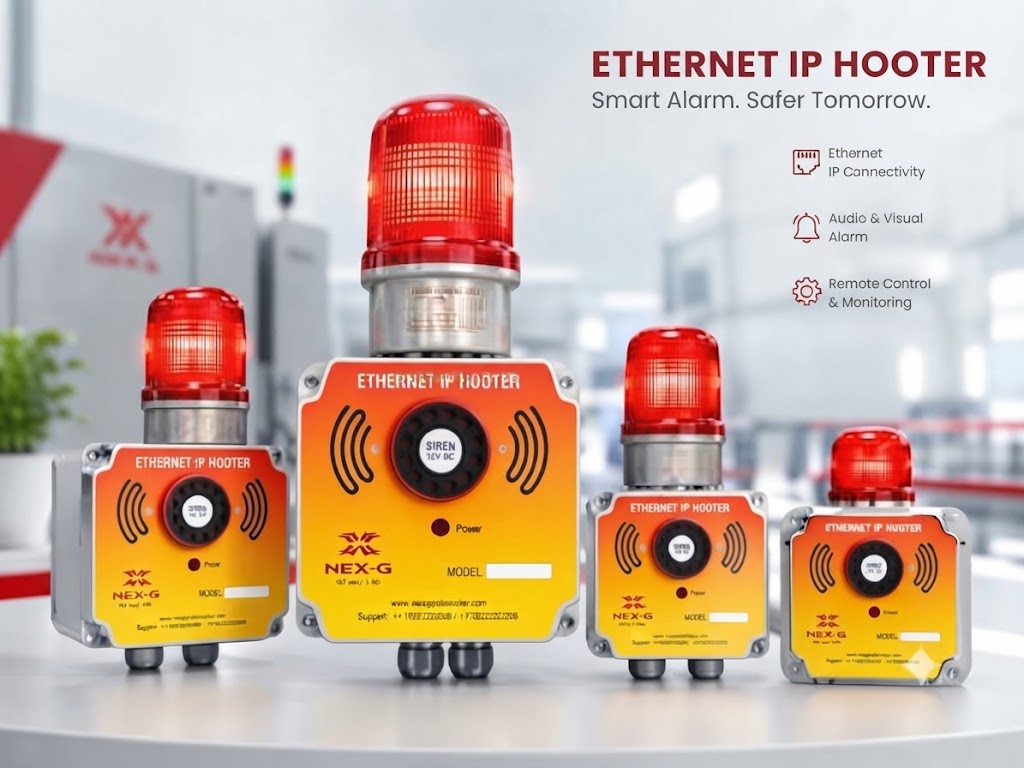
Network-controlled industrial alert system. Replace legacy relay wiring with seamless digital control via SCADA, PLC, HMI or HTTP requests.

Industry 4.0 IP65 Rated PoE Ready Modbus TCP 110 dB
Ethernet IP Hooter
Nex-G Industrial Alert System
110 dB
Sound Output @ 1m
IP65
Ingress Protection
10/100
Ethernet Mbps
<5W
Power Consumption
−10→60°C
Operating Range

Digital alerting
for connected plants.

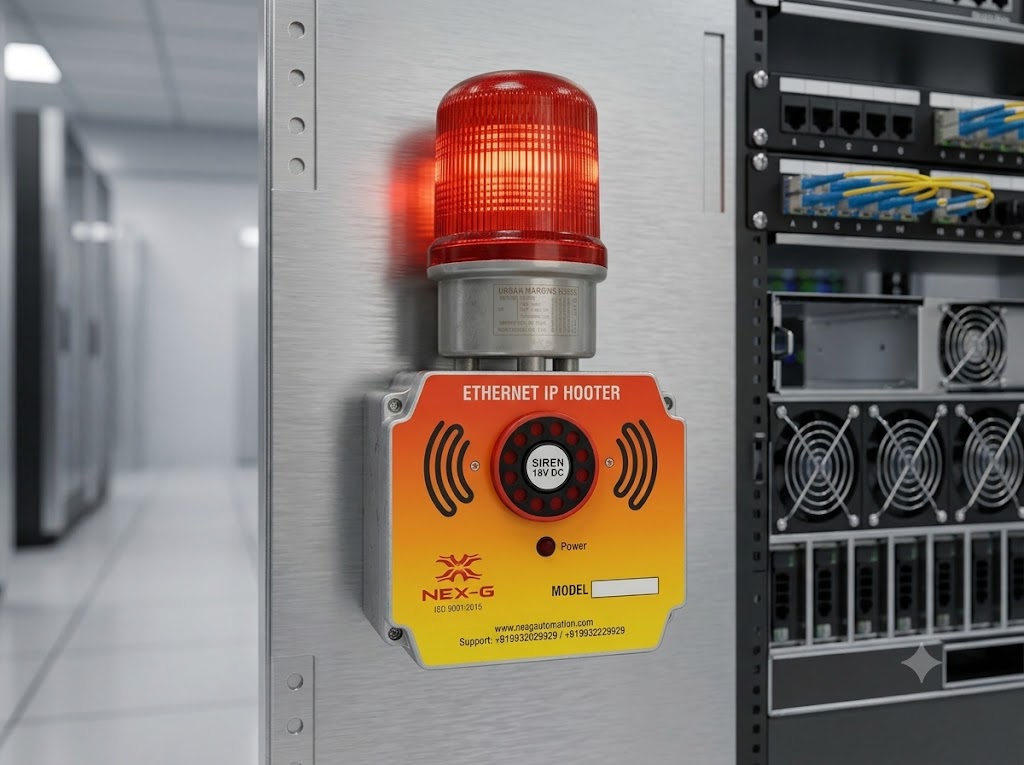
The Ethernet IP Hooter is an industrial network controlled audible alert device designed for automation environments. Instead of depending entirely on conventional relay wiring, the hooter can receive commands through Ethernet infrastructure and work with connected control systems.

Ethernet connectivity Centralized control Multi-zone deployment HTTP integration Modbus TCP Low power operation
Ethernet IP Hooter industrial system

From network command
to audible notification.

Connect the hooter to your Ethernet infrastructure and trigger audible notifications from PLCs, SCADA systems, HMIs, web applications or custom automation software.

01 Ethernet / TCP-IP
02 Web Control
03 REST API
04 Modbus TCP
05 Multi-Zone
06 Industrial Housing

Multiple ways
to trigger alerts.

The Ethernet-based architecture allows the hooter to become part of different automation environments instead of operating as an isolated audible device.

01 Web UI Browser-based control and configuration from a network-connected computer.
02 HTTP / REST API Software applications and dashboards can send network requests for alert activation.
03 Modbus TCP Network-based industrial communication for compatible automation architectures.
04 PLC Connect the alerting function with automated machine and process conditions.
05 SCADA Centralized plant monitoring and alarm activation through automation software.
06 HMI Provide operators with direct control from an industrial interface.

How the alert reaches the plant floor.

A typical deployment connects an automation source to the Ethernet network and then routes the alert command to the required hooter.

01
PLC / SCADA / HMI
Machine or process generates an alert condition.
→
02
Ethernet Network
Command travels through the plant network.
→
03
IP Hooter
Network command reaches the configured device.
→
04
Audible Alert
Audible notification is activated in the target zone.

Alert Modes

Continuous Alert Suitable for sustained alarm conditions requiring continuous audible indication.
Intermittent Alert Periodic audible signalling for warnings, machine states and operational notifications.
Custom Pattern Configure alert behaviour according to the application requirement.
Zone Alert Use individual units for targeted area-specific notification.
Emergency Alarm Audible notification for defined emergency and abnormal operating conditions.
Machine Warning Link equipment conditions to audible operator notifications.
Process Completion Notify operators when defined machine or process cycles are completed.
Fault Notification Provide an audible indication when a configured fault condition occurs.

Built around network control.

Designed to bring audible alerting into connected industrial environments while keeping deployment simple and scalable.

01
Ethernet/IP Communication
Native network control replaces bulky relay wiring. Trigger the hooter from an authorized networked device.
02
Web-Based Control Interface
Built-in browser-based control allows configuration of sound patterns, schedules and operating zones.
03
RESTful HTTP API
Integrate with SCADA, HMI, PLC systems and custom dashboards using HTTP GET or POST requests.
04
Scalable Multi-Zone Deployment
Deploy multiple units throughout a facility and control individual or grouped alert zones.
05
Industrial 24/7 Operation
IP65 enclosure protection with −10°C to +60°C operating range and low power consumption.

Industrial Advantages

01
Reduced Control Wiring

Ethernet-based triggering can simplify conventional relay-control architecture.

02
Centralized Control

Manage audible notification devices from connected automation systems.

03
Multi-Zone Expansion

Add multiple networked hooters across different plant areas.

04
Low Power Operation

Designed for network-connected industrial alerting with power consumption below 5W.

05
Easy Software Integration

HTTP and network-based interfaces allow connection with software systems.

06
Industrial Protection

IP65 enclosure specification supports industrial deployment requirements.

07
Flexible Control

Web, HTTP, PLC, SCADA and Modbus-based control options support different architectures.

08
Industry 4.0 Ready

Network connectivity makes audible alerting part of connected industrial infrastructure.

Technical Specifications

Configuration may vary by model.
Product Type Ethernet IP Industrial Hooter Network-connected audible alert device
Network Interface 10/100 Mbps Ethernet RJ45 network connection
Protocols HTTP · TCP/IP · Modbus TCP Network and industrial communication options
Control Interface Web UI · RESTful API Browser and software-based control
Sound Output Up to 110 dB @ 1m High-output audible notification
Sound Modes Continuous · Intermittent · Custom Application-dependent alert configuration
Input Power 12–24V DC Model-dependent power configuration
PoE Optional Power over Ethernet option available
Power Consumption <5W Low-power operation
Enclosure IP65 · ABS or Metal Industrial housing options
Dimensions 100 × 100 × 80 mm Compact industrial form factor
Operating Temperature −10°C to +60°C Specified operating temperature range
Deployment Individual / Multi-Zone Suitable for scalable network installations
Integration PLC · SCADA · HMI · Software Network-based industrial integration
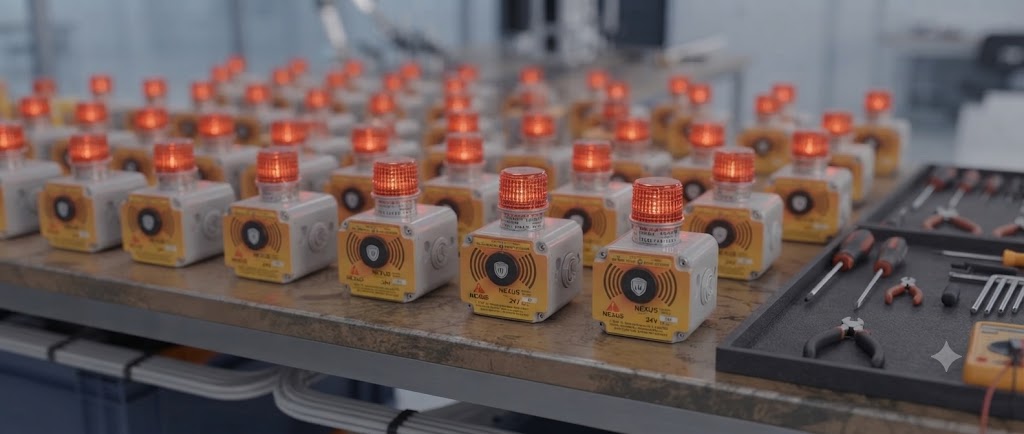
Ethernet IP Hooter deployment

Built for distributed
plant alerting.

Multiple Ethernet IP Hooters can be positioned across different areas of a facility and connected to the same network infrastructure. This allows alerting to be organized around machines, zones, production areas or process requirements.

Plant Floor Position hooters close to the required audible notification area.
Network Connect devices through the existing Ethernet infrastructure.
Control System Integrate with PLC, SCADA, HMI or custom software.
Alert Zone Activate the required device or configured group.

Applications

01 Manufacturing Plants
02 Assembly Automation
03 Hazard Alarms
04 Smart Buildings
05 Utilities & Infrastructure
06 Industrial IoT
07 Machine Warning Systems
08 Process Notification
09 Remote Alarm Systems

Configure the system
around your network.

Network Connection Connect the device to the required Ethernet network infrastructure.
Device Configuration Configure the required network and operating parameters.
Control Source Connect the hooter to PLC, SCADA, HMI or software control.
Alert Logic Define which process, machine or event triggers the audible alert.
Zone Mapping Assign individual devices to plant areas or operating zones.
System Testing Verify network communication and audible alert operation.

Ethernet IP Hooter FAQ

The product is designed for network-based integration with industrial automation environments and supports TCP/IP and Modbus TCP communication options.
Yes. The system is designed for scalable multi-zone deployment, allowing multiple network-connected hooters to be positioned across different plant areas.
The Ethernet architecture is intended to provide network-based control, reducing the dependency on conventional relay-control wiring for supported applications.
Yes. A web-based control interface is specified for configuration and operation.
RESTful HTTP API support allows integration with custom software, dashboards and other network-connected applications.
PoE is listed as an optional power configuration. The exact configuration can depend on the selected model.
The specified operating temperature range is −10°C to +60°C.
The specified sound output is up to 110 dB at 1 metre.

Book a Live Demo

Tell us about your requirement and our team will contact you.

```html ```