


Industrial Ethernet Alarm Systems for Manufacturing Plants
Modern manufacturing facilities need reliable communication between automation equipment, control systems and industrial warning devices. Ethernet-based alarm systems help connect these elements through an industrial network, supporting centralized alarm activation and remote warning applications.
Nex-G Automation develops industrial automation and network-connected hardware solutions with communication options including HTTP, TCP/IP and Modbus TCP, depending on the selected device and system configuration.
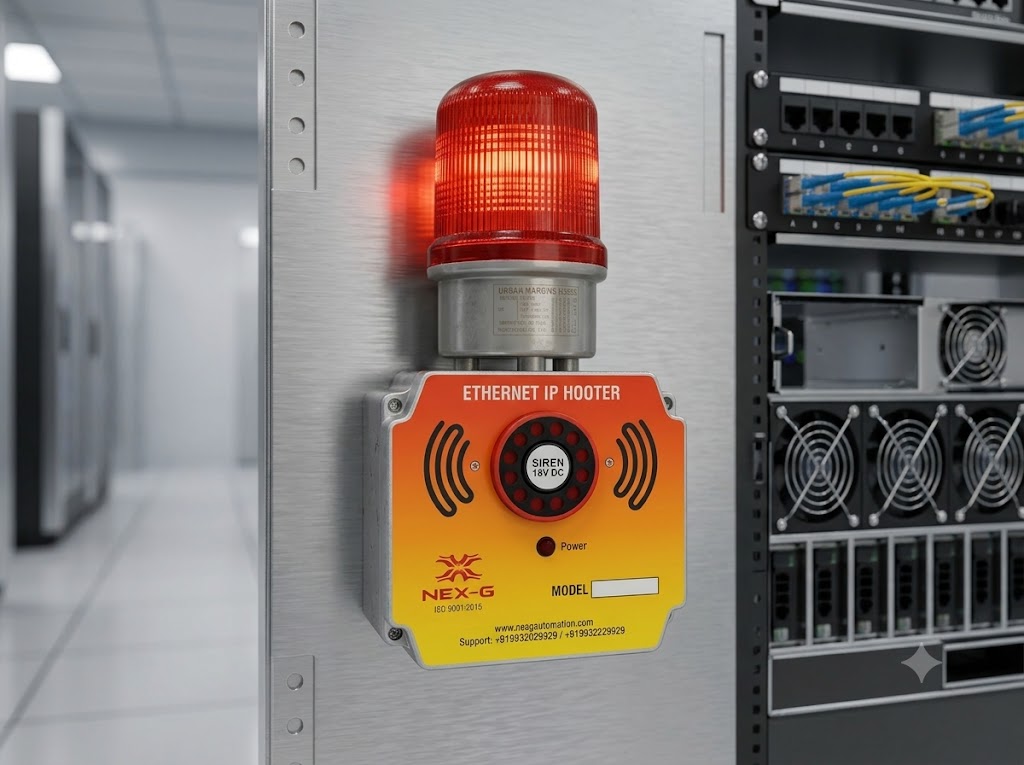
Connected Alarm Solutions for Industrial Environments
An industrial Ethernet alarm system connects warning devices to a facility's communication network. Instead of depending entirely on individual local control circuits, network-connected devices can receive commands from compatible automation equipment and software.
This approach can support factory warning systems, machine fault notifications, production-line alerts and centralized audible or visual warning applications. The communication method and control logic are selected according to the equipment, network architecture and application requirements.
Ethernet-based industrial warning solutions are useful where multiple machines, production areas or control stations need coordinated alarm communication.
What is an Industrial Ethernet Alarm System?
It is a network-connected warning arrangement in which compatible control systems communicate with industrial audible or visual alert devices over Ethernet.
Depending on the implementation, the system may use PLC commands, SCADA events, HMI controls, HTTP-based communication or Modbus TCP to activate connected warning equipment.
The final design depends on device compatibility, communication requirements and the required alarm logic.
Network-Based Industrial Warning Functions
Explore the key functions involved in designing an Ethernet-based industrial warning and alarm arrangement for connected manufacturing environments.
Ethernet Network Communication
Connect compatible industrial warning devices to an Ethernet LAN for network-based communication with supported automation systems.
Remote Hooter Control Through TCP/IP
Enable remote alarm activation through supported network commands and control interfaces, subject to the selected device's communication capabilities.
Factory Alarm Applications
Design warning arrangements for manufacturing plants, production lines, machine areas and industrial process environments.
PLC and SCADA Integration
Connect compatible PLC, SCADA and HMI systems using supported communication interfaces and application logic.
HTTP and Modbus TCP Communication
Use supported HTTP-based interfaces and Modbus TCP communication for integration with compatible industrial control applications.
Audible and Visual Warning Arrangements
Plan audible hooters and compatible visual warning indicators according to the requirements of the industrial application.
Remote Hooter Control Through TCP/IP
Remote hooter control allows authorised control applications to activate a compatible industrial warning device through an Ethernet network. This arrangement can reduce the need for separate point-to-point control wiring for every remote activation requirement.
Depending on the selected device and implementation, commands may originate from a PLC, SCADA application, HMI, browser-based interface or custom software. Communication and command handling must be configured according to the supported device interface.
- Network-based alarm activation through compatible interfaces.
- Integration with supported PLC and industrial control applications.
- HTTP API and Modbus TCP communication where supported.
- Centralised monitoring and control possibilities based on system design.
From Control System to Industrial Warning
A typical network-based alarm arrangement connects a control source to an Ethernet network and then to a compatible industrial warning device.
Control Source
PLC, SCADA, HMI or compatible automation software generates an alarm command.
Ethernet Network
The command travels through the configured industrial Ethernet network.
Warning Device
A compatible network-connected hooter or warning device receives the command.
Industrial Alert
The warning device produces the configured audible or visual indication.
PLC and SCADA Compatible Industrial Alarm Systems
Industrial alarm integration depends on the communication interfaces available in the control system and the connected warning device. The following interfaces describe common integration approaches.
| Integration Method | Industrial Application |
|---|---|
| PLC Integration | Alarm commands can be initiated by compatible PLC logic and communicated to supported network-connected warning devices. |
| SCADA Integration | SCADA events and operator-defined alarm conditions can be used as control sources where the required interface is supported. |
| HMI Integration | Compatible HMI applications can provide operator controls for industrial warning activation. |
| HTTP API | Supported HTTP-based commands can allow software applications to communicate with compatible Ethernet alarm devices. |
| Modbus TCP | Modbus TCP can be used for communication between compatible industrial devices and control systems. |
| Custom Software | Custom automation applications can be integrated according to the device's supported network interface and command requirements. |
Note: Integration availability depends on the selected hardware, firmware, communication protocol, network configuration and project requirements. Native EtherNet/IP protocol support is not implied by Ethernet connectivity.
Industrial Alarm Systems with Web-Based Control
Web-based control can provide an accessible interface for operating compatible network-connected industrial alarm devices. Depending on the device and software implementation, authorised users may be able to issue alarm commands through a browser or a connected application.
For industrial environments, access control, network security, user permissions and reliable communication should be considered during system design.
Configuration Considerations
- Device network addressing and connectivity.
- Supported browser or software control interface.
- Communication protocol and command configuration.
- Authorised access and network security.
- Alarm logic and functional testing.
Ethernet Alarm Systems for Manufacturing Plants
Network-connected warning arrangements can be planned for a range of industrial environments where machine status, process conditions and operator alerts need audible or visual indication.
Manufacturing Plants
Production Lines
Machine Warning Systems
Industrial Fault Alerts
Warehouses
Utilities and Infrastructure
Industrial IoT Systems
Process Notifications
Benefits of Network-Based Industrial Alarm Control
A properly designed Ethernet alarm arrangement can simplify communication between industrial control equipment and connected warning devices.
Centralised Alarm Management
Coordinate supported warning devices through a defined network and control architecture.
Network-Based Communication
Use Ethernet communication for compatible industrial alarm control applications.
Automation System Integration
Connect compatible warning devices with PLC, SCADA, HMI and software applications.
Flexible System Design
Plan warning arrangements according to production areas, machine locations and application requirements.
Remote Warning Activation
Activate compatible network-connected warning devices from supported control applications.
Application-Specific Configuration
Define communication and alarm behaviour according to the actual industrial process.
Ethernet IP Hooter for Network-Based Alarm Applications
Explore the Ethernet IP Hooter product page for device-specific information and available communication features.
Network-Connected Industrial Audible Alert Device
The Ethernet IP Hooter is designed for industrial audible warning applications using supported network communication interfaces. It can be considered for compatible PLC, SCADA, HMI and software-based alarm arrangements.
Visit the dedicated product page to explore its available features, technical specifications and application details.
Industrial Ethernet Alarm System FAQs
Common questions about network-based industrial warning systems, Ethernet communication and automation integration.
An industrial Ethernet alarm system connects compatible audible or visual warning devices to an Ethernet network. It allows supported control systems and software applications to communicate with warning devices using configured network interfaces.
Yes, a network-connected hooter can support remote activation when its hardware and firmware provide the required TCP/IP-based communication interface. The exact command method depends on the device.
Integration is possible when the PLC or SCADA application and the warning device support compatible communication interfaces. HTTP-based communication and Modbus TCP may be used where supported by the selected equipment.
A conventional alarm may use direct relay or hardwired control connections. An Ethernet alarm uses network communication between compatible control equipment and warning devices. The suitable approach depends on the installation and control requirements.
Multiple compatible devices can be included in an industrial Ethernet alarm architecture. Device quantity, network design, addressing and control logic depend on the selected hardware and project requirements.
A web-based interface can be used when the selected device or connected software application supports browser-based control. Configuration options and user access depend on the actual implementation.
Depending on the hardware and application, industrial Ethernet alarm arrangements may use TCP/IP networking, HTTP-based interfaces and Modbus TCP. Protocol compatibility should be verified for each connected device.
Consider the number of warning devices, required sound or visual indication, network infrastructure, PLC or SCADA compatibility, communication protocols, installation environment and alarm control requirements. Contact the Nex-G Automation team to discuss your application.
Looking for an Industrial Ethernet Alarm Solution?
Share your factory alarm requirements, control system details and communication preferences. Nex-G Automation can help you explore suitable industrial hardware and network-based automation approaches.